


Yoga Butt: Why Your Sitting Bone Hurts and How to Heal It
Posted In
August 20, 2025
Posted On
Fun fact: “Yoga butt” is a common overuse injury among yoga practitioners, especially those who spend a lot of time stretching their hamstrings.
If you’ve noticed a nagging pain around your sitting bone during forward folds, splits, or even while sitting, yoga butt could be the culprit.
Despite the funny name, this can be a frustrating injury. Fortunately, you don’t necessarily need to stop practicing yoga. Instead, you may need to change how you’re using your range of motion.
What Is Yoga Butt?
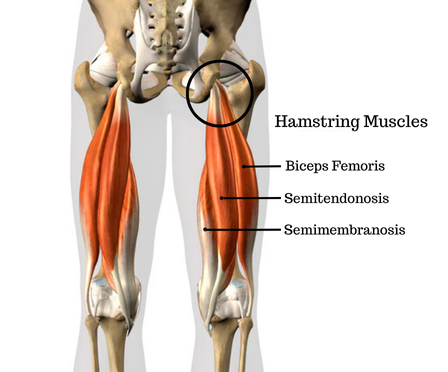
Yoga butt is a nickname for proximal hamstring tendinopathy, which affects the hamstring tendon near its attachment to the pelvis at the ischial tuberosity—better known as your sitting bone.
Here’s what that means:
- Proximal: closer to your core
- Hamstring: the muscles along the back of your thigh that bend your knee and help extend your hip
- Tendinopathy: a problem involving a tendon, the connective tissue that attaches muscle to bone
In other words, the result is often a very literal pain in the butt.
Why Does Yoga Butt Happen?
Yoga includes a LOT of hamstring lengthening. Think Downward Dog, Forward Fold, Half Split, Pyramid, and Standing Split.
However, flexibility and control aren’t necessarily the same thing.
Repeatedly pushing into deep ranges without enough strength or control can increase stress on the proximal hamstring tendon. This is especially important if you’re naturally flexible or hypermobile.
Additionally, heated yoga classes may make you feel more flexible. As a result, it can be easier to move farther into a stretch than the range you can actively control.
For more information on tendon injuries and tendinopathy, check out this article.
How to Help Yoga Butt Heal
The goal isn’t simply to stretch your hamstrings more. In fact, repeatedly stretching an already irritated proximal hamstring tendon may be the exact opposite of what it needs.
Instead, start by controlling your range and gradually building strength.
Strengthen Your Glutes and Hamstrings
Your glutes and hamstrings work together to control your hip. Therefore, building strength in both can help you better control the ranges you’re accessing during yoga.
Exercises may include:
- Bridges with your feet elevated to target the hamstrings
- Tabletop kickbacks for hip extension control
- Bird dogs to strengthen the posterior chain
- Progressive hamstring and glute loading as your tolerance improves
How to Protect Your Hamstrings During Yoga
You don’t have to stop moving. Instead, pay attention to how you’re moving.
In forward folds, keep your weight distributed through the whole foot rather than shifting heavily into your heels.
Meanwhile, during lunges and Warrior poses, press your front heel into the floor. This can help you feel your glutes and hamstrings participate in the pose.
Most importantly, notice where your stretch sensation starts rather than always trying to find where your flexibility ends.
Be Extra Mindful During Hot Yoga
Heat can make your body feel more loose and limber. Because of this, you may have access to a larger passive range of motion than you can actually control.
So, just because you can go deeper doesn’t necessarily mean you need to.
Instead, focus on maintaining strength and control throughout the pose, especially as you approach your end range.
Yoga Butt Recovery Takes Time
Tendons can take time to adapt. Therefore, think in terms of gradual progress rather than forcing yourself back into your deepest range.
One of my clients—a yoga teacher, mom, former bodybuilder, and trainer—came to me with classic sitting-bone pain. Eventually, it was affecting both her personal practice and her ability to teach.
We identified areas where her glutes, hamstrings, and hip flexors weren’t working together efficiently. From there, we worked within ranges she could control without pain and gradually increased the challenge.
Over time, she returned to 180° standing splits and loaded flat-back Pyramid poses without pain.
She didn’t need to give up her flexibility. Instead, she needed the strength and control to support it.
Ready to Get Back to Pain-Free Movement?
If yoga butt or another nagging pain keeps showing up in your practice, let’s figure out why.
Rather than simply avoiding the movement that hurts, we’ll look at how your body is working as a whole. Then, we can identify potential compensation patterns and build a plan to help you move with more strength and confidence.
Book a Private Session
Not ready to book? Book a Free Phone Consult or Join My Email List for movement tips, pain education, and practical ways to better understand your body.
Fun fact: “Yoga Butt” is one of the most common yoga injuries — especially among hot yoga enthusiasts. If you’ve ever felt a sharp or nagging pain deep in your butt near your sitting bone, you might be dealing with it.
What is “Yoga Butt”?
Yoga Butt is the casual name for Proximal Hamstring Tendinopathy — an injury to the hamstring tendon where it attaches to your pelvis at the ischial tuberosity (a.k.a. the sitting bone).
- Proximal = closer to your core
- Hamstring = the muscles at the back of your thigh that bend your knee and move your leg backward (hip extension)
- Tendinopathy = injury to a tendon
How Does It Happen?
Yoga often emphasizes hamstring lengthening — think Downward Dog, Forward Fold, Half Split, Pyramid Pose. When you push too far without adequate control, especially if you’re hypermobile, the tendon can become irritated.
There are two common ways this injury develops:
- Acute: You overstretch in class and feel pain immediately or soon after. This is often tendonitis, involving inflammation.
- Chronic: Repetitive overstretching over time leads to tendinosis, which may not cause inflammation but still results in persistent pain.
Hot yoga can increase risk because the heat makes you feel more flexible than you actually are — tempting you to push past your true range.
Symptoms of Yoga Butt
- Pain deep in the butt near the sitting bone
- Discomfort when sitting for long periods
- Pain during forward folds, lunges, or splits
- Stiffness or weakness in the hamstrings
How to Heal and Prevent Yoga Butt
The key: Control your range of motion and strengthen the muscles that support your hips.
1. Strengthen Your Glutes and Hamstrings
Strong glutes help offload hamstring tendons, while hamstring strength (especially near the hip) improves resilience. Try:
- Bridge with feet on blocks (targets proximal hamstrings)
- Tabletop kickbacks (builds hip extension control)
- Bird dog (connects the whole posterior chain)
2. Practice Mindful Yoga Cues
- In forward folds, keep weight evenly in your feet — don’t dump into your heels.
- In lunges and Warriors, press the front heel into the ground to activate glutes and hamstrings.
- In balance poses, actively push the standing leg into the ground.
- Respect end-range awareness — stop where the stretch starts, not where it ends.
3. Be Patient with Healing
Proximal hamstring tendinopathy can take months to heal — but you can still practice yoga by reducing your range and building strength gradually.
Real-Life Recovery Story
One of my clients — a yoga teacher, mom, and former bodybuilder — came in with classic sitting bone pain that affected both her practice and teaching. Through targeted glute and hamstring strengthening, controlled range training, and progressive loading, she went from pain in every forward fold to performing standing splits and flat-back pyramids with zero pain.
Don’t let Yoga Butt keep you off your mat.
Book a private yoga therapy consult to start your healing journey and return to pain-free practice.


