From the Feet Up: How Foot Stability Affects Your Body
Posted In
August 20, 2025
Posted On
Fun Fact: Supination is much less common than pronation… but I’m naturally quite supinated.
Foot stability can tell us a lot about what’s happening farther up the body.Your feet are the foundation of every step you take—literally. Whether you’re walking, running, or simply standing, the way your feet move and connect with the ground influences everything above them, from your knees and hips to your back, shoulders, and even neck.
Pronation vs. Supination: The Basics
Every step you take involves a natural rolling of the feet:
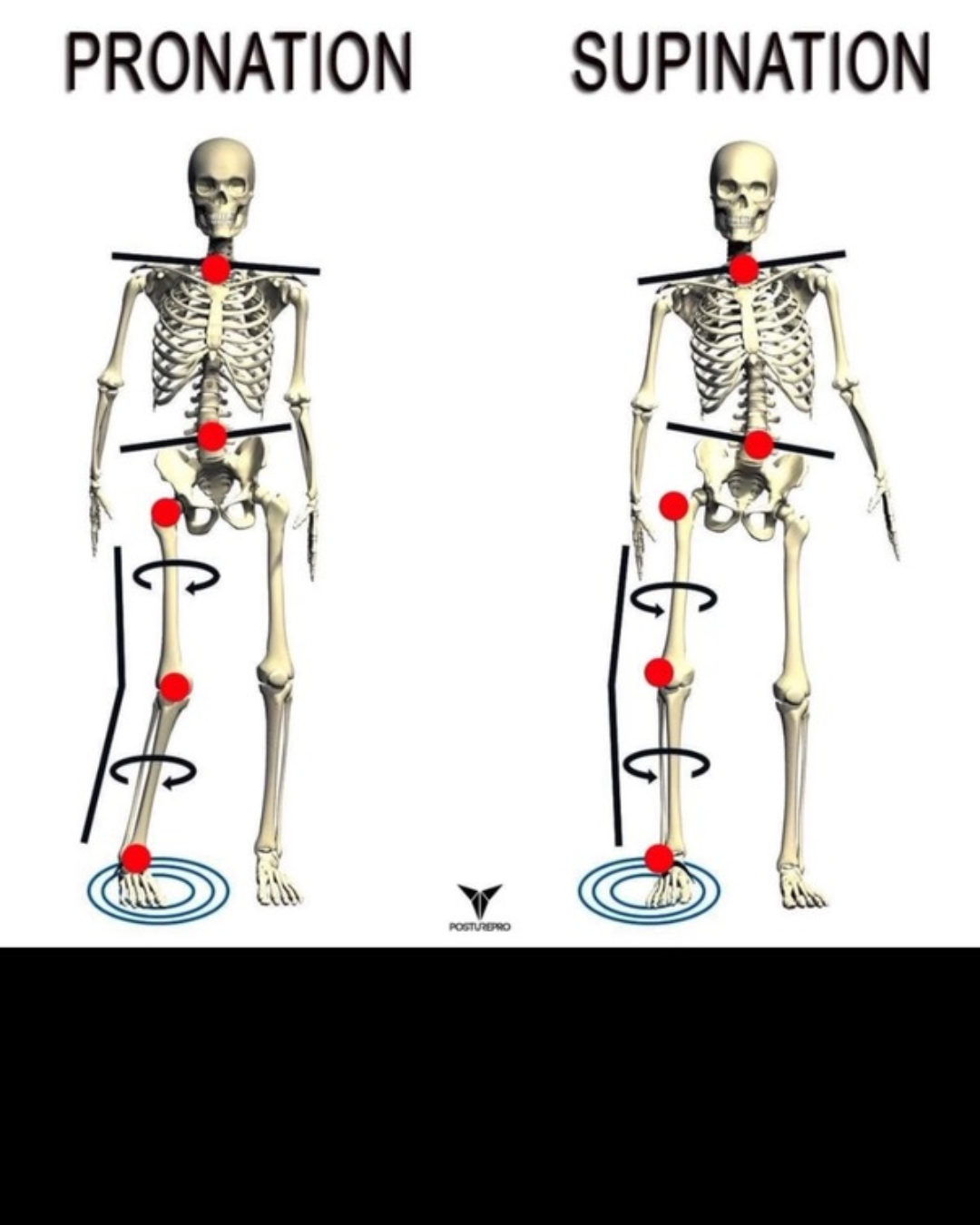
- Pronation → The foot rolls inward.
- Supination (Underpronation) → The foot rolls outward.
Both are essential movements for absorbing shock and propelling you forward. However, when one pattern dominates—especially excessively—it can affect how the rest of your body responds. As a result, you may see compensations or imbalances farther up the body.
How to Spot Your Foot Pattern
Signs of Overpronation
Overpronation is the more common pattern. Some signs include:
- Flat or collapsed arches
- Inside of the shoe wears down faster
- Possible same-side hip drop (that leg may feel longer)
- Internally rotated lower leg or hip
Signs of Supination (Underpronation)
On the other hand, signs of supination may include:
- Naturally high arches
- Outside of the shoe wears down faster
- Possible same-side hip hike, which can feel like tightness in the hip or lower back
- Externally rotated lower leg or hip
Why Foot Stability Matters for the Rest of Your Body
Your foot alignment can impact the entire kinetic chain. After all, your feet are your first point of contact with the ground.
A weak or unstable connection to the ground can influence how your knees, hips and the rest of your body respond to movement. Therefore, when someone comes to me with knee discomfort, hip pain or back tension, the feet may be one of the places we look.
The more time you spend on your feet—whether for work, workouts or daily life—the more opportunity these patterns have to show up.
💡 Tip: No one has perfect alignment, and our bodies are incredibly good at adapting. If you notice signs of pronation or supination but don’t have pain or movement limitations, don’t stress! Your body may be managing just fine.
However, if you do have recurring aches or movement limitations, your foot stability may be one piece of the puzzle.
How I Test Ankle and Foot Stability
If foot alignment seems linked to your discomfort, I often begin with a Single Leg Stance Test.
This simple assessment helps me see:
- Which way your ankle naturally shifts
- How well your hip stabilizes in response
From there, we can start looking farther up the body to see how your individual foot pattern may be affecting your overall movement.
Common Muscle Imbalances
Once we’ve identified a pattern, we can look at the muscles that may be contributing to it.
Supination is often linked to:
- Overactive tibialis anterior and/or tibialis posterior
- Underactive hip flexors and adductors
Pronation is often linked to:
- Overactive peroneals (outer lower leg)
- Underactive hip abductors
Of course, these patterns aren’t the same for everyone. That’s why assessment matters.
Rather than simply trying to “fix” a pronated or supinated foot, we can look at how your ankle, knee, hip and the rest of your body are working together. Then, we can create a targeted movement plan to improve foot stability and integrate those changes into your larger movement patterns.
Ready to Strengthen Your Foundation?
If you suspect your foot pattern is contributing to pain or movement limitations, your feet may be a good place to start.
By addressing foot stability and understanding what’s happening from the feet up, we can work toward better movement, greater stability, and a body that feels better doing the things you love.
Ready to take a closer look at what’s going on in your body? Book a free phone consult to see how we can work together.
Not ready to book? Join my email list for practical tips to help you better understand your body, manage pain, and move with more confidence.