Breathing Techniques: Understanding the 3 Zones of Breathing
Posted In
August 20, 2025
Posted On
Fun fact: You take around 20,000 breaths every day—so let’s optimize those reps.
The breathing techniques you use throughout the day can influence everything from your nervous system to your posture and movement. And breathing well isn’t simply about taking a bigger breath. It’s about how your body changes shape to make room for that breath.
Let’s look at the three Zones of Breathing, what they can tell us about your body, and how improving your breathing mechanics can help you move and feel better.
Why Breath Matters
Here’s the hot take: breath is a shape change.
When you inhale, you’re not just pulling air into your lungs—you’re changing the shape of your torso to create space for that air. How you create that shape determines how efficiently you breathe and how your body responds.
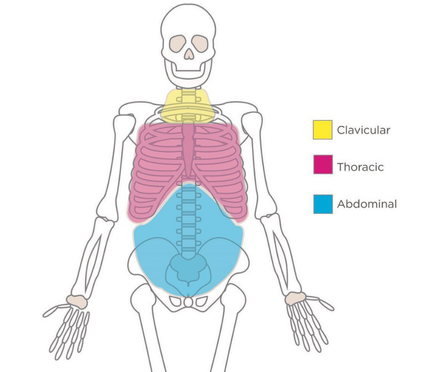
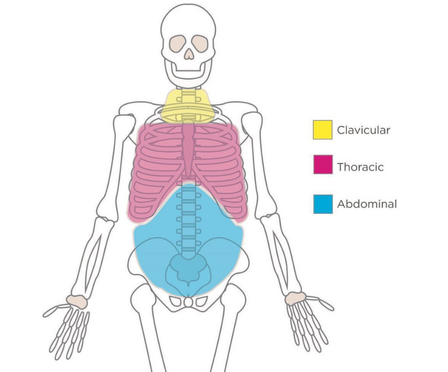
Understanding the 3 Zones of Breathing
Zone 1: Abdominal Breathing
This is your most calming, parasympathetic breath. The diaphragm drops into the abdominal cavity, creating visible belly expansion. You might also feel expansion in your low back, waist, or pelvic floor.
Why it matters: Abdominal breathing helps you relax, recover, and downshift from stress.
Common blocks:
- Scar tissue from abdominal surgeries
- Overactive core muscles like the transverse abdominis
When abdominal expansion is limited, you may shift into Zone 2.
Zone 2: Ribcage (Thoracic) Breathing
Your body’s go-to for movement and performance—perfect for sports, dance, heavy lifting, or running. Zone 2 is a 360° ribcage expansion: front, sides, and back.
Why it matters: Zone 2 supports both your sympathetic (action) and parasympathetic (rest) systems.
Common restrictions: Tight chest, intercostals, or obliques can limit rib movement. Without full ribcage expansion, you may default to Zone 3.
Zone 3: Supraclavicular Breathing
This is the “neck and shoulders” breath, lifting the collarbones. It’s a natural sympathetic stress response: gasping in fear, catching yourself mid-fall, or struggling to breathe during an asthma attack.
Why it matters: Zone 3 is useful in emergencies, but it’s not a breathing pattern we want to rely on all day. Too much Zone 3 can leave you tense, tired, and shallow-breathing.
How to Breathe Better
The goal is abdominal-thoracic breathing—a combination of Zones 1 and 2 for a full, functional breath.
Try This: Find Your 360° Breath
- Place your hands on the sides of your ribs.
- Inhale slowly, feeling your ribs expand into your hands.
- Notice the movement through your torso: belly expansion (Zone 1) and ribcage expansion (Zone 2).
If your diaphragm is working overtime for postural support, try practicing in a reclined or fully supported position and notice whether your breath feels easier or fuller.
How We Use Breathing Techniques in Private Yoga Sessions
In our sessions, we:
- Start with breathwork to calm the nervous system and improve body awareness.
- Retrain breathing patterns using props and supported positions.
- Work with the diaphragm like any other muscle—it can be trained, stretched, and supported to work more efficiently.
- Give you tools you can use in daily life for pain management, movement, and stress.
Improving Your Breath Is About Giving Your Body More Options
Improving your breath quality can improve the way you feel and move. These breathing techniques aren’t about forcing yourself to take the “perfect” breath. They’re about giving your ribcage, diaphragm, and abdominal wall more options so your body doesn’t have to rely on one breathing strategy all day long.
Ready to Breathe and Move Better?
If your breathing patterns are contributing to tension, discomfort, or the way you move, we can take a closer look at what your body is doing and why.
Book a free phone consult to learn more about working together, or join my email list for practical tips to help you better understand your body, manage pain, and move with more confidence.